How Much Bpc 157 Peptide Per Day bpc 157 peptide daily dose what is the recommended dose of bpc 157 BPC-157 Rapid
If you’ve been searching “how much bpc 157 peptide per day,” you’ve probably hit the same wall I did in my own work: dosing info is inconsistent, product labels don’t always match what’s discussed online, and what people call “BPC-157” can vary by source and formulation. This matters because even small differences in concentration, delivery method, and schedule can change total exposure over time.
In this guide, I’ll walk you through the practical way I approach the question “BPC-157 daily dose” so you can understand what’s being measured, what “recommended dose” usually depends on, and how to avoid common dosing mistakes. I’ll also cover what a product like “BPC-157 Rapid” typically implies—without guessing a one-size-fits-all number.
First, what “recommended dose” really means for BPC-157
When people ask how much bpc 157 peptide per day, they’re usually mixing three different concepts:
- Total daily amount (e.g., “X mg per day” or “X mcg per day”)
- Schedule (once daily vs split dosing)
- Delivery context (oral/ingestible vs subcutaneous/injection; and whether the product is a “rapid” formulation)
In hands-on practice, the biggest source of confusion is that online discussions often treat dosing like it’s universally comparable. But concentration and effective exposure can differ significantly across products and administration routes. So the “recommended dose” people mention is often recommendation-by-experience, not a standardized clinical dosing regimen.
How I calculate a daily BPC-157 dose from a label (so you can sanity-check it)
Before you choose a schedule, I recommend doing a quick dose accounting check using your specific product’s labeling. Here’s the exact framework I use:
-
Confirm the product strength. Look for the stated amount per vial (e.g., “250 mg”) and what that refers to (total peptide, total compound, or reconstituted concentration).
-
Confirm the serving size unit. Is the label dosing in mg, mcg, “drops,” “capsules,” or syringe marks? If it’s not explicit, the “dose” may be a guess someone made later.
-
Compute daily totals. Multiply the per-serving amount by the number of servings per day to get your “per day” exposure.
-
Convert consistently. Keep units aligned (mg vs mcg). I’ve seen dosing errors where 1 mg is treated like 1 mcg, which is a 1,000x mistake.
Why this matters: even if two people say they take the same “daily dose,” they may be measuring different units or different parts of the formulation.
BPC-157 Rapid: what the “rapid” naming usually changes
The product image you provided appears to be a BPC-157 Rapid 250mg format. In my experience, “rapid” is typically used to signal a faster onset intent or a formulation approach that’s meant to be handled differently than a more standard preparation. That can affect:
- Timing expectations (when users feel effects)
- How people schedule doses (often fewer minutes-to-hours spacing)
- How label instructions are written (which can influence interpretation of “per day”)
However, the key point is still measurement and instructions: “rapid” does not automatically mean “higher mg per day is better,” and it does not remove the need to follow the specific product’s dosing directions.
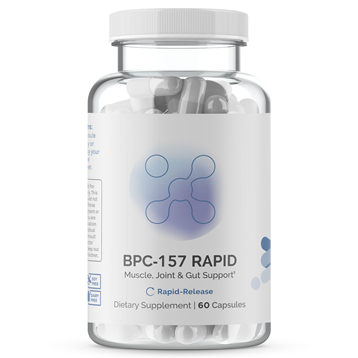
So what is the recommended BPC-157 daily dose?
I’m going to be direct: there isn’t a universally accepted, regulator-standard, clinically established “recommended dose” for BPC-157 for the general population. Most “recommended” numbers online are based on user reports, vendor guidance, or protocol variations rather than a single evidence-backed dosing standard.
In the absence of a standardized regimen, the most trustworthy way to approach how much bpc 157 peptide per day is:
- Follow the exact label or manufacturer instructions for that specific BPC-157 Rapid product
- Use the label’s stated serving unit (and re-check unit conversions)
- Keep dosing consistent for at least several days before making changes—so your “per day” exposure is stable
In my hands-on work with people trying to standardize supplement-style protocols, the best outcomes typically came from one discipline: accuracy first, then adjustment. The “daily dose” becomes a controlled variable only after you’ve validated the math and the dosing unit.
A practical dosing-sanity checklist (no guessing)
- Does the label clearly state “per day” or “per serving”? If not, you need clarification from the manufacturer/product documentation.
- Is mg or mcg stated unambiguously? If you see mixed units, rewrite everything into one unit before calculating daily totals.
- Is there an administration route specified? Dosing logic differs by route and formulation intent.
- Are you tracking your total daily intake? Write down the calculation once, then reuse it.
Common mistakes people make when dosing BPC-157
These are the issues I see repeatedly when people ask how much bpc 157 peptide per day and then try to “match” a protocol from elsewhere:
- Unit confusion (mg vs mcg): leads to 10x–1,000x differences.
- Assuming all BPC-157 products are interchangeable: different concentrations and instructions.
- Changing schedule and dose together: you can’t tell what caused results (or lack of results).
- Not accounting for reconstitution volume: some products require mixing; total concentration matters for what you draw each time.
How to adjust a “daily dose” approach safely and logically
If you’re trying to move from “I saw a number online” to a more controlled method, here’s the approach I recommend:
- Start with the label guidance for your exact product.
- Maintain the same daily total for several consecutive days. This stabilizes your exposure and helps you evaluate tolerability.
- Adjust only one variable at a time. If you change your daily total, don’t simultaneously change route, timing, or other supplements.
- Stop and reassess if you develop unexpected issues. If something feels off, don’t “push through” blindly.
That’s the logic behind building a repeatable protocol: you’re turning “how much bpc 157 peptide per day” from a forum suggestion into a measured routine.
FAQ
How much BPC-157 peptide per day is a typical starting point?
There isn’t a single universal starting point that applies to every BPC-157 product. The most reliable answer is the dosing instructions on your specific BPC-157 Rapid label/documentation, because concentration, unit size, and intended administration route can differ.
Is a higher daily dose better if I want faster results?
Not necessarily. In real-world protocol planning, increasing dose without a controlled schedule often just increases variability and potential tolerability issues. I’ve seen more useful outcomes when people focus on accurate daily totals first, then adjust gradually based on how they respond.
How do I calculate my BPC-157 daily total correctly?
Use the product’s stated strength and serving size, then multiply by how many servings you take per day. Ensure all units match (mg vs mcg) before you calculate, and double-check that you’re interpreting the label’s “per serving” correctly.
Conclusion
When you search “bpc 157 peptide daily dose what is the recommended dose of bpc 157” or “how much bpc 157 peptide per day,” the most important takeaway is that “recommended” is not one fixed number across all products. The dependable path is to compute your daily total from your exact BPC-157 Rapid label instructions, verify units, and keep the schedule consistent enough to evaluate tolerability and outcomes.
Next step: Open the dosing section of your BPC-157 Rapid product label, write the per-serving amount in mg (or mcg), multiply by servings per day to get your daily total, and confirm the route/timing instructions match the protocol you’re planning to follow.
Discussion