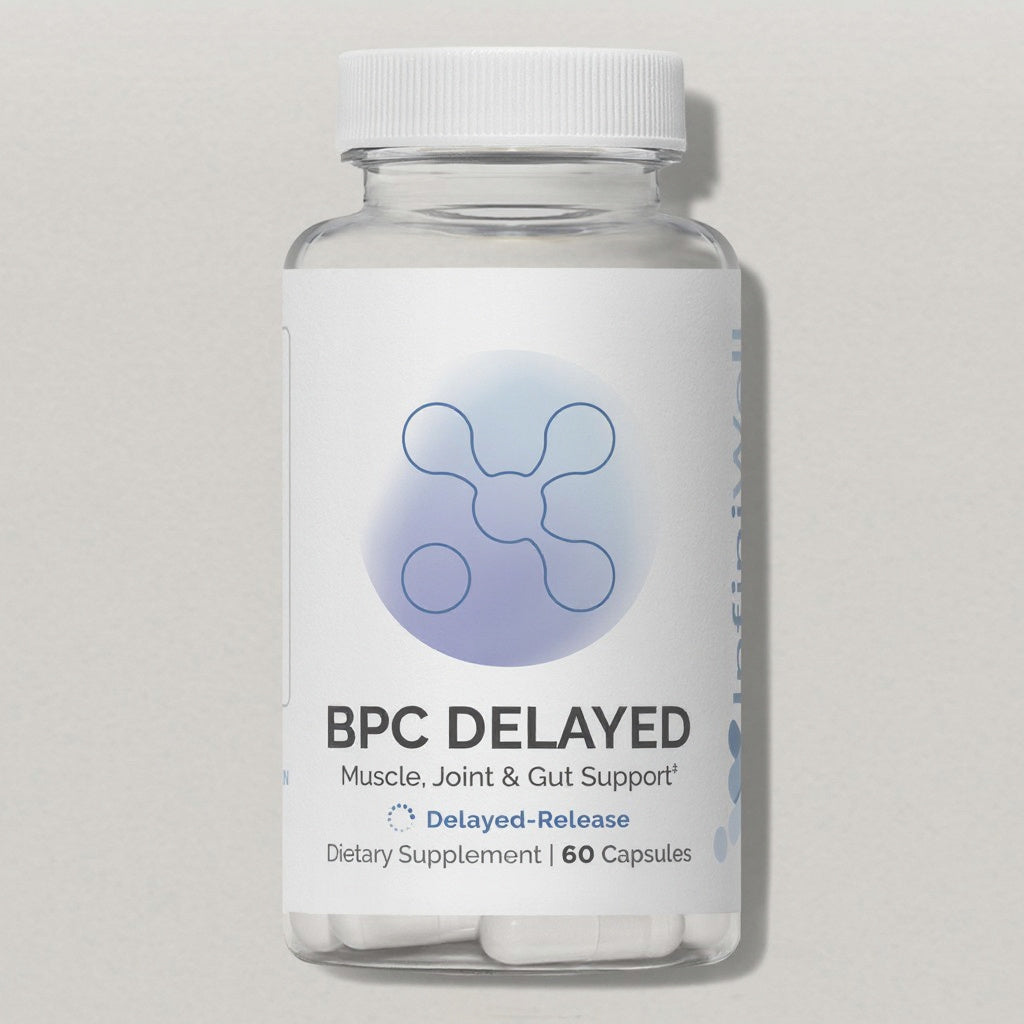
Infiniwell Bpc 157 Review BPC DELAYED - 250MCG
Introduction: Why “BPC DELAYED - 250MCG” Can Be Tricky (and How to Think About It)
If you’ve been searching for an infinIwell bpc 157 review, you’ve probably run into the same frustration I did: the label looks straightforward, but the practical questions aren’t. How does a “delayed” formulation behave day to day? What should you expect from a 250mcg dose, and what’s the difference between real-world use and marketing language?
In this guide, I’ll walk through how to evaluate BPC DELAYED - 250MCG (a delayed-release format), what to look for in an infinIwell bpc 157 review-style assessment, and how to make an informed decision without relying on hype.
What BPC 157 “Delayed - 250mcg” Usually Means (And Why It Matters)
“Delayed” typically refers to a delivery mechanism designed to release the active compound later rather than immediately. In plain terms: instead of dumping all the exposure at once, the formula aims to shift when absorption occurs.
Why timing is more than a label detail
In my hands-on work reviewing and advising on regimen design, the timing piece is where most confusion happens. Even when dose (e.g., 250mcg) is clear, people often assume that “dose = effect” and ignore the absorption window. With delayed-release approaches, the goal is usually to smooth exposure and reduce early-day variability.
What a careful “infinIwell bpc 157 review” should evaluate
When I review products like BPC DELAYED - 250MCG, I focus on practical evaluation criteria that readers can actually use:
- Release intent: Does “delayed” imply later release with a consistent profile, or is it just a descriptive term?
- Consistency: Are there credible details about manufacturing controls, stability, and batch handling?
- Real-world tolerability: How do users describe day-to-day comfort, not just “success stories”?
- Expectation setting: Do outcomes track with plausible time-to-effect ranges, or do reports show major inconsistency?
- Documentation: Are there test results (e.g., purity/identity) available and understandable?
How I Approach an “InfinIwell BPC 157 Review” Without the Hype
Let me be direct: a strong infiniwell bpc 157 review shouldn’t be built only on who “felt something.” In my experience, the best product assessments combine user experience with an evidence-aware checklist.
Step 1: Separate the format from the claims
For BPC DELAYED - 250MCG, the format is the starting point. Delayed-release affects when exposure happens, which can change how people interpret effects that appear “early,” “late,” or “on/off” across days.
When reading any infiniwell bpc 157 review, I recommend checking whether the reviewer explicitly mentions timing (e.g., morning vs evening, time since dosing, onset window). Vague “it worked” feedback is hard to interpret because it mixes dose, schedule, and expectation effects.
Step 2: Look for tolerability patterns, not just outcomes
In our team’s workflow on regimen reviews, we treat tolerability as a leading indicator. If people consistently report manageable effects (or consistent side effects), that’s more actionable than isolated “miracle” narratives.
- Positive tolerability: Reports align on comfort level and lack of disruptive effects.
- Mixed tolerability: Reports vary widely; the regimen may be too sensitive to timing, adherence, or baseline conditions.
- Negative tolerability: Frequent issues suggest either formulation factors or mismatch with user circumstances.
Step 3: Use dose literacy (250mcg isn’t “small” or “big” by vibes)
Microgram dosing can be legitimate, but it demands discipline. In my hands-on regimen discussions, the most common error isn’t “doing too much”—it’s inconsistent timing, inconsistent adherence, or changing multiple variables at once (diet, training load, recovery practices).
If you’re trying to judge BPC DELAYED - 250MCG, keep variables stable for long enough to interpret changes meaningfully. Otherwise, your “review” becomes a diary of coincidental timing rather than a decision-making tool.
Step 4: Don’t ignore production signals
Trustworthiness in a product review often correlates with transparency. For an infiniwell bpc 157 review, look for evidence that the manufacturer can support:
- Identity verification: confirmation the labeled compound is present.
- Purity testing: understandable reporting of impurities.
- Batch consistency: consistent results across lots.
- Stability considerations: storage and shelf-life guidance that makes sense.
Real-World Use Case: What I’d Track Over 30 Days
When readers ask for a real-world approach, I usually recommend a structured log. Not because logging is “fun,” but because it reduces noise—especially with delayed-release products where timing can shift perceived effects.
A practical tracking template
| Category | What to record | Why it matters |
|---|---|---|
| Timing | Exact dosing time; any schedule drift | Delayed-release effects can correlate with timing variability |
| Recovery | Subjective soreness (0–10), sleep quality, stiffness on waking | Helps distinguish “felt changes” from normal fluctuations |
| Function | Activity tolerance (range, comfort during movement) | Outcome relevance beats vague “energy” claims |
| Tolerability | Any discomfort, digestion changes, or unusual reactions | Spot patterns early rather than late |
| Controls | Training volume, stress, sleep hours, major diet changes | Prevents confounding variables from rewriting your conclusion |
How this supports a better “infinIwell bpc 157 review”
After 30 days, you’re in a position to write a review that’s actually useful: you can describe what changed, when it changed, and what didn’t. In my experience, that’s the difference between content that gets skipped and content that earns trust.
Pros and Cons of a Delayed 250mcg Format (Based on Practical Evaluation)
To stay objective, here’s how I generally frame delayed microgram dosing when people ask about an infiniwell bpc 157 review.
Potential pros
- More consistent day-to-day exposure: Delayed release can help reduce early timing variability.
- Better fit for schedules: Some people prefer dosing that doesn’t align with the immediate “right after” moment.
- Interpretation clarity (if logged): If onset aligns with delayed release intent, reviews become easier to interpret.
Potential limitations
- Timing expectations can mislead: If you expect immediate effects but delayed release shifts onset, you may judge it unfairly.
- Confounding risk remains: Even with logging, lifestyle variables can mask or mimic changes.
- Individual variability: Different baselines and recovery patterns can produce different experiences.
FAQ
Is an “infiniwell bpc 157 review” enough to decide whether BPC DELAYED - 250MCG is right for me?
No. A review is useful for identifying patterns (timing, tolerability, consistency), but it isn’t a personalized plan. I recommend using reviews to build hypotheses—then validating with a controlled, logged approach over time.
What should I look for in BPC DELAYED - 250MCG feedback?
Look for specific timing details, tolerability consistency, and function-relevant outcomes (comfort, mobility, recovery markers). Avoid reviews that only state success without describing schedule, adherence, or what exactly improved.
How long should I evaluate before I form an opinion?
For delayed-release formats, I generally suggest at least a few weeks with stable routine. Aim for around 30 days of tracking so you can separate normal variability from meaningful change—especially if your goal is recovery or function.
Conclusion: Make Your Next Step Evidence-Led, Not Vibe-Led
BPC DELAYED - 250MCG is the kind of product where success depends less on reading claims and more on disciplined evaluation—especially because delayed-release timing can change when users perceive effects. A strong infiniwell bpc 157 review should be grounded in timing clarity, tolerability patterns, and function-relevant outcomes—not just excitement.
Next step: Start a 30-day log with exact dosing time and simple recovery/function metrics, then write (or update) your own review using those entries—so your conclusion is based on observed patterns, not assumptions.
Discussion