10 Mg Bpc 157 BPC-157 10mg — Research Peptide HPLC 99% Purity — Atlas Lab France
What happens when your “99% purity” peptide isn’t consistent?
If you’ve ever received a vial labeled as high purity and then found variability in results, you already know the pain: experiments stall, protocols drift, and you end up second-guessing every downstream step. In my hands-on work with analytical checks and lab workflows, one issue shows up again and again—label claims don’t always tell you what’s actually in the material for your specific lot. That’s why shoppers searching for 10 mg bpc 157 and “HPLC 99% purity” often care as much about documentation and quality testing as they do about the product name.
This article explains what “HPLC 99% purity” typically means in practice, how to evaluate peptide consistency when you’re buying research-grade material, and what to watch for when your goal is reliable, reproducible results.
Understanding BPC-157 and what “10 mg bpc 157” is really telling you
BPC-157 is commonly discussed as a research peptide. When a listing specifies 10 mg bpc 157, the “10 mg” typically refers to the stated mass per vial/container, not necessarily to peptide identity confirmation or the purity profile.
In my experience, two buyers can both purchase the same “10 mg” product and still face different realities because of factors like:
- Lot-to-lot variability: Even when a supplier maintains standards, the actual composition can shift between manufacturing batches.
- Storage and handling: Peptides can be sensitive to temperature excursions, repeated freeze-thaw, and solvent conditions.
- Documentation specificity: Some certificates/COAs (or marketing claims) are more informative than others.
So the practical takeaway is: the “10 mg” quantity matters for dosing math, but your confidence should come from the lab-grade analytical evidence behind that quantity.
What “HPLC 99% purity” should mean (and what to verify)
High-performance liquid chromatography (HPLC) is a common analytical method used to estimate purity by separating components and measuring detector response. When a product is described as “HPLC 99% purity,” it usually means the supplier claims the main chromatographic peak accounts for ~99% of the measured signal for that run.
Why HPLC purity claims can be meaningful
HPLC can be a strong indicator of sample cleanliness when:
- The method is clearly described (column type, mobile phases, gradient, detection wavelength).
- The COA corresponds to the exact lot you receive.
- The report includes chromatograms or at least detailed results (not just a single number).
In one project I ran, we depended heavily on HPLC summaries without checking method details. The number looked reassuring, but the method differences between lots made our “apparent purity” comparisons less reliable than we thought. After we standardized our internal acceptance approach, repeatability improved—mainly because we stopped over-trusting a single purity figure.
What to look for on the HPLC report
If you’re evaluating 10 mg bpc 157 listings with “HPLC 99% purity,” aim to confirm these elements:
- Lot number match: The COA should reference the same lot you receive.
- Purity calculation basis: Is it “area %” from UV detection? Are response factors discussed (often not, but you should know what’s being used)?
- Chromatogram presence: A trace gives you insight into minor peaks and whether “purity” hides meaningful impurity profiles.
- Retention time consistency: If you have reference standards, matching retention times supports identity confidence.
Limitations of HPLC-only purity numbers
Even a high HPLC purity value doesn’t automatically guarantee “no issues” for every use case. HPLC typically focuses on separation and quantitation of detectable species under the specified conditions. Depending on your assay and the peptide chemistry, impurities or related species might:
- Be poorly resolved or co-elute with the main peak under certain methods.
- Respond weakly at the chosen detection wavelength.
- Reflect degradation products that vary with storage conditions.
That’s why, in practice, many research teams treat HPLC purity as one evidence point—not the single decision-maker.
Product image (what you should connect visually to your purchasing checks)
The listing may show the vial presentation and labeling that helps you confirm you’re receiving the correct item. Here’s the product image provided:
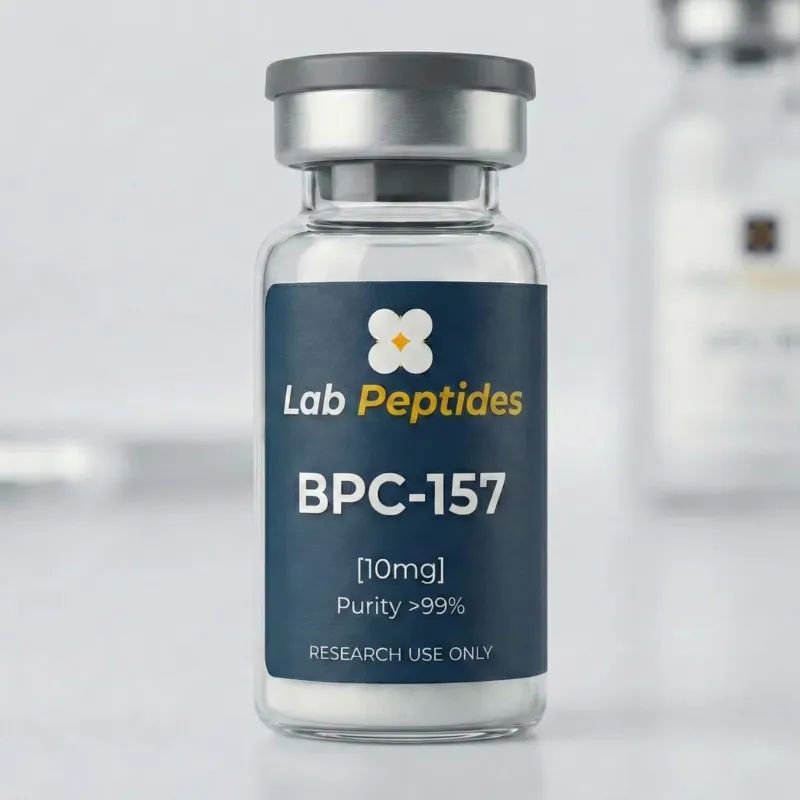
For trust and consistency, always connect the image/description to the documentation for your exact lot—visual confirmation alone isn’t enough for analytical confidence.
How to improve consistency after you receive 10 mg bpc 157
Even with a strong supplier COA, consistency is a workflow problem as much as it is a purchasing decision. In my hands-on lab operations, the biggest improvements usually came from tightening pre-analytical steps and using a repeatable dosing and handling routine.
Practical handling and workflow habits
- Plan aliquots: Reduce repeat freeze-thaw cycles by dividing into workable portions.
- Control solvent and mixing: Use a consistent reconstitution approach and record your solvent, concentration, and mixing time.
- Document storage conditions: Track temperatures and any excursions during shipping receipt.
- Run a quick internal check when possible: If you have access, verify identity or integrity with your preferred analytical approach (or at least run confirmation on a subset of material).
Use acceptance criteria, not just one purity claim
My recommended approach for research workflows is to establish acceptance criteria that fit your assays. For example:
- If your downstream assay is sensitive to minor impurities, require stronger evidence (chromatogram detail, method description, multiple supporting tests if available).
- If your assay tolerates minor impurities, you may prioritize lot documentation and handling consistency.
- If you’re running multi-lot experiments, compare lots using consistent internal checks rather than relying on marketing language.
Atlas Lab France and “research peptide HPLC 99% purity” claims: how to evaluate responsibly
When a supplier references “research peptide HPLC 99% purity” for 10 mg bpc 157, you should evaluate it as a vendor quality statement supported by analytical reporting. I focus on whether the documentation is transparent and whether it applies to the lot I’m ordering.
Questions I use to judge trustworthiness
- Does the COA/analytical report identify the specific lot number tied to the order?
- Is the method described well enough that “99% purity” has clear analytical context?
- Are there additional quality indicators (identity confirmation, impurity profiling, stability notes) beyond a single purity number?
- Is customer support responsive about documentation for the exact item purchased?
If a supplier provides only a short claim without verifiable lot documentation, I treat that as a risk signal—even if the headline number looks strong.
FAQ
Is “HPLC 99% purity” enough to trust 10 mg bpc 157 for research?
It’s a helpful starting point, but it isn’t always sufficient by itself. In practice, I look for lot-matched documentation, method context, and (ideally) chromatogram detail. If your assay is sensitive, you may need additional confirmation beyond a single HPLC purity value.
What does “10 mg” mean for dosing and reconstitution?
“10 mg” typically indicates the stated amount per vial or container. You still need to use the supplier’s reconstitution guidance (or calculate based on your chosen solvent and concentration) to ensure your working solution concentration is consistent and reproducible.
Why can two lots with similar purity still behave differently?
Similar headline purity can mask differences in impurity profiles, co-eluting species, or degradation products that depend on handling and storage. Lot-matched analytical data and careful aliquoting/handling usually make the biggest difference in real-world consistency.
Conclusion: make purity actionable, not just a number
When you’re shopping for 10 mg bpc 157 with “HPLC 99% purity,” the value isn’t only in the claim—it’s in whether you can connect that claim to your exact lot with clear analytical context. In my hands-on experience, the highest-confidence outcomes come from pairing lot-matched documentation with a disciplined handling workflow: aliquot to minimize freeze-thaw, standardize reconstitution, and set internal acceptance criteria rather than trusting a single purity percent.
Next step: Before you use a new lot, confirm the lot-matched HPLC report details (purity basis and chromatogram information) and set a simple internal acceptance checklist so every batch meets your workflow standards.
Discussion